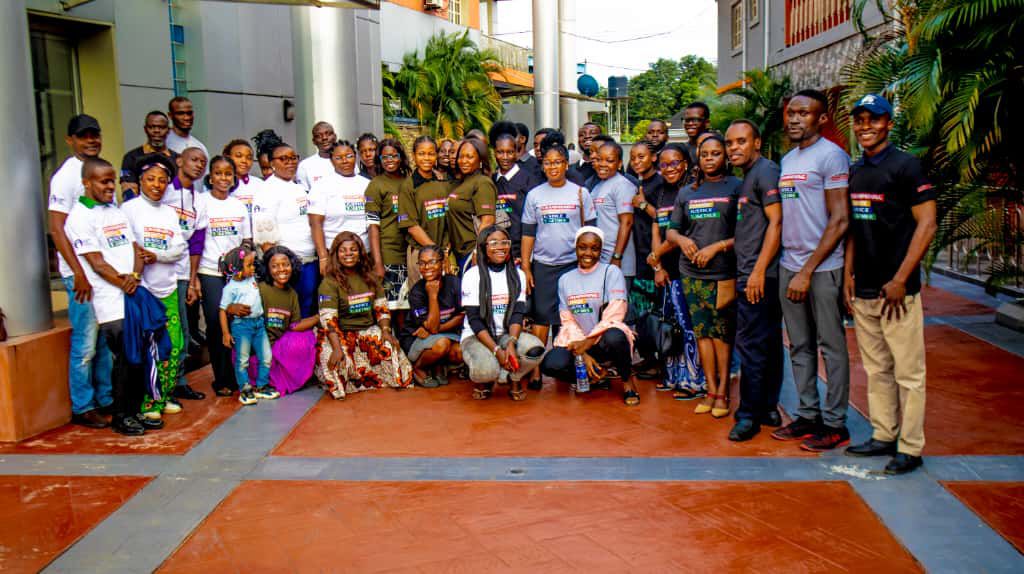
Uyo, Akwa Ibom – October 24, 2025 – The Clement Isong Foundation (CIF), in partnership with ActionAid Nigeria, the Local Conference of Youth (LCOY Nigeria), and YOUNGO, successfully organized the 2025 South-South Regional Local Conference of Youth (LCOY Nigeria) in Uyo. CIF and ActionAid handed down a crucial caution to Nigerian leaders and policymakers: abandon “false climate solutions.” They also demanded greater transparency in climate finance and the equitable inclusion of youth and frontline communities.
The conference was held under the Strategic Partnership Agreement II (SPA II) project, implemented by ActionAid Nigeria and funded by DANIDA.
Accelerating Action for a Just Transition
The conference was themed “Youth at the Forefront of Climate Justice: Accelerating Action for a Just Transition.”
Specifically, Mr. Tijah Bolton-Akpan, Executive Director of Policy Alert, delivered the keynote address. He passionately advocated for three things: a justice-centered climate action framework, greater accountability in the fossil fuel sector, and mandatory youth inclusion in policy formulation.
Mr. Bolton-Akpan challenged participants, urging them to push for transparency from leaders: “Do not just ask questions—question the answers.” He tasked both the Federal Government and private sector actors to transition from policy drafting to decisive implementation. Crucially, they must consciously work to ensure youth are actively involved in decision-making spaces.
Taking Ownership of Climate Solutions
In his opening remarks, Mr. Elkanah Oluyori, Executive Director, Clement Isong Foundation, strongly encouraged the young attendees to take ownership of climate solutions rather than wait for inclusion. He emphasized that courage, innovation, and leadership are essential for building sustainable alternatives. “Are we going to be the victims or the vanguards of the crisis?” he asked.
Furthermore, Dr. Caroline Gordian, Project Lead, CIF, highlighted the mission to empower young people, women, and marginalized groups. She noted that when the Foundation equips youth with the right tools and platforms, they transform into active creators of change, not passive recipients of aid.
Key Policy Recommendations and Outcomes
Breakout and Thematic Group Work took place across seven critical areas. These sessions identified local challenges, proposed youth-driven solutions, and drafted policy recommendations. The areas included: Climate Adaptation and Ecosystem Resilience, Sustainable Agriculture and Climate Justice, Renewable Energy and Climate Innovation, Youth Innovation and Leadership, Climate Education and Gender Equity, Urban Sustainability and Circular Economy, and Climate Finance.
A powerful communique emerged at the meeting’s end, identifying youth as the key drivers of the Just Transition. In summary, the communique reiterated the foundation’s core advocacy points:
- Climate Justice as a Moral Imperative: The communique declared climate justice a moral and human rights issue demanding collaboration and inclusive governance.
- Real Solutions: Agroecology, renewable energy, and innovation are powerful pathways for resilience and green job creation.
- Accountability: Governments and private actors must prioritize implementation over drafting, ensuring youth are part of decision-making spaces.
Key Policy & Project Highlights:
- Promotion of agroecology and organic farming for climate-friendly food systems.
- Adoption of a 40% renewable energy target by 2030 across the region.
- Formal youth representation in environmental policy councils.
- Establishment of a Regional Youth Climate Fund to support innovative projects.
The 2025 LCOY celebrated the resilience and creativity of young people shaping a sustainable future. Ultimately, the conference made a strong case for linking local solutions across the South-South region to broader global advocacy.