Despite the Federal Government diligently disbursing Ecology Funds to states in the Niger Delta, including Akwa Ibom, the funds’ objectives are only minimally realized due to poor governance structures, according to a new Policy Brief.
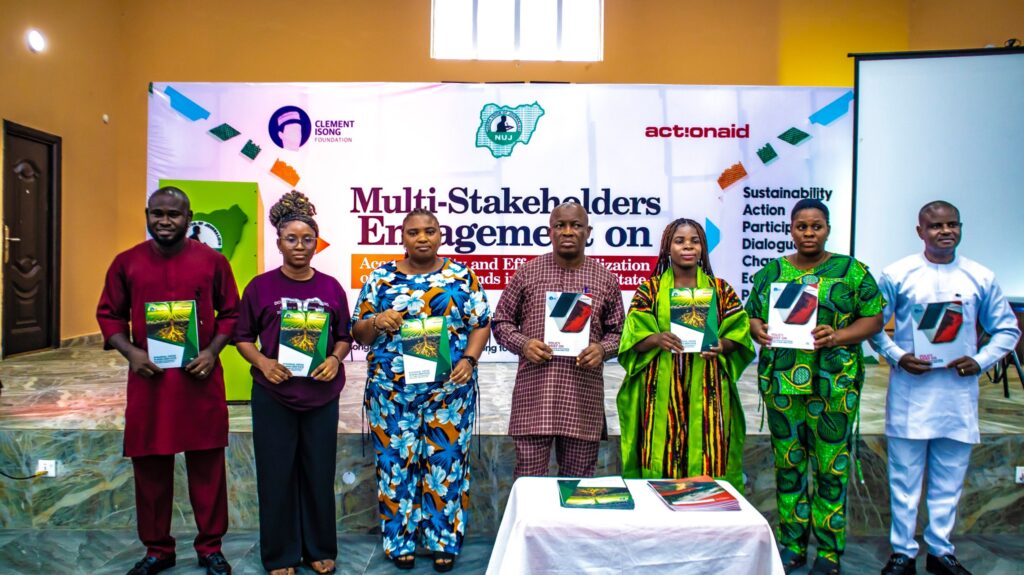
The brief on the Utilization of Ecological Funds in Akwa Ibom State was produced by the Clement Isong Foundation (CIF) with support from ActionAid Nigeria. Its findings were revealed last week in Uyo during a one-day multi-stakeholder engagement focused on accountability and effective utilization of these critical funds. The event was co-organized by the State’s Council of the Nigeria Union of Journalists (NUJ), CIF, and ActionAid.
Key Findings on Fund Mismanagement
The Ecological Fund is a first-line charge on the Federation Account (FAAC), intended to address severe ecological challenges like erosion, flooding, and oil spills.
The CIF Policy Brief revealed that from January 2023 to May 2025, the 31 Local Government Areas (LGAs) in Akwa Ibom received a total of N1.919 billion from FAAC as ecological funds.
However, the report highlighted major barriers limiting the fund’s effectiveness:
- Lack of Policy Clarity: Absence of clear policies guiding fund deployment.
- Political Interference: Undue influence in project selection and execution.
- Weak Accountability Frameworks: Inadequate mechanisms for tracking expenditure.
- Fund Diversion: Reports indicate cases of non-disclosure and diversion of funds to administrative overheads instead of ecological mitigation projects.
Demands for Transparency and Equity
In light of these findings, the civil society groups issued strong calls for action:
- LGA Compliance: LGA chairmen must comply with the Akwa Ibom Fiscal Responsibility Law 2020. This law requires the institutionalization of citizen engagement in budget planning, ensuring ecological projects meet real community needs.
- NDDC Accountability: The Foundation called on stakeholders to prevail on the Niger Delta Development Commission (NDDC) to show tangible work commensurate with the 50 percent deduction it receives at source for ecological interventions in Akwa Ibom State. As CIF stated, “For Akwa Ibom, it is not a privilege but a right for NDDC to channel ecological projects into the state…”
- Cross-Sector Transparency: All levels of government, development partners, and civil society must ensure ecological funds are used transparently and equitably to safeguard the environment and protect vulnerable communities across Nigeria.
The Clement Isong Foundation remains dedicated to using research and evidence-based advocacy to ensure integrity, prudence, and accountable leadership in the management of public funds intended for sustainable development.